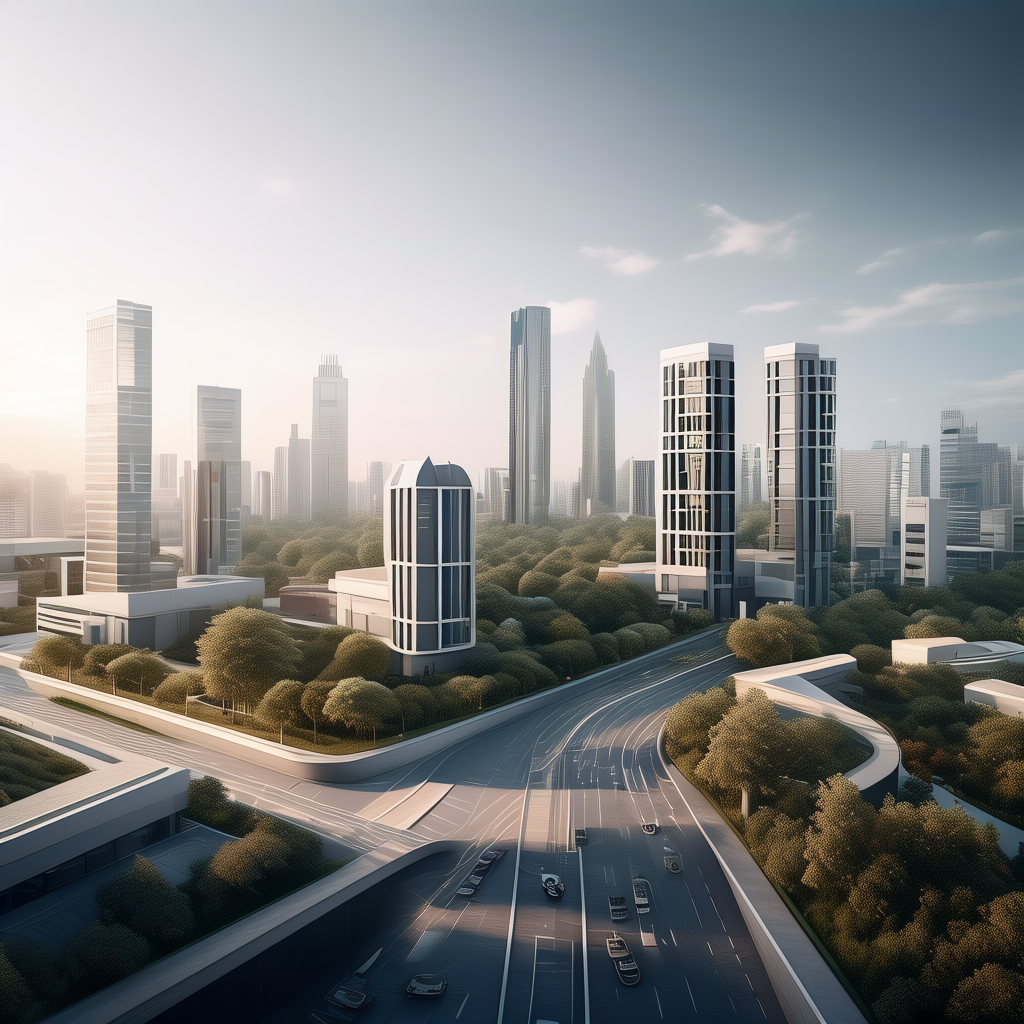
Recent industry discussions highlight growing adoption of AI-powered urban simulation tools across municipal planning departments in China. These platforms integrate real-time mobility data, land-use patterns, and climate modeling to test scenarios for transit-oriented development, pedestrian flow optimization, and microclimate adaptation. Unlike traditional GIS-based analysis, newer systems employ machine learning to identify emergent spatial behaviors—such as informal path formation or heat island intensification—without requiring pre-defined rules. According to reports from Shanghai and Shenzhen planning institutes, pilot applications have shortened scenario evaluation cycles by up to 40%, enabling faster iteration during early-stage master planning. The methodology remains complementary to human-led design judgment, with planners emphasizing calibration against on-the-ground observation and community feedback. International collaborations, particularly with European research groups focused on agent-based modeling, are expanding technical capacity while raising questions about data sovereignty and model transparency. As computational literacy among planning staff increases, integration of these tools into routine feasibility studies and public consultation workflows appears increasingly viable.
行业资讯
AI-Driven Urban Simulation Gains Traction in Chinese City Planning
DEHE·每日早讯
2026-05-01