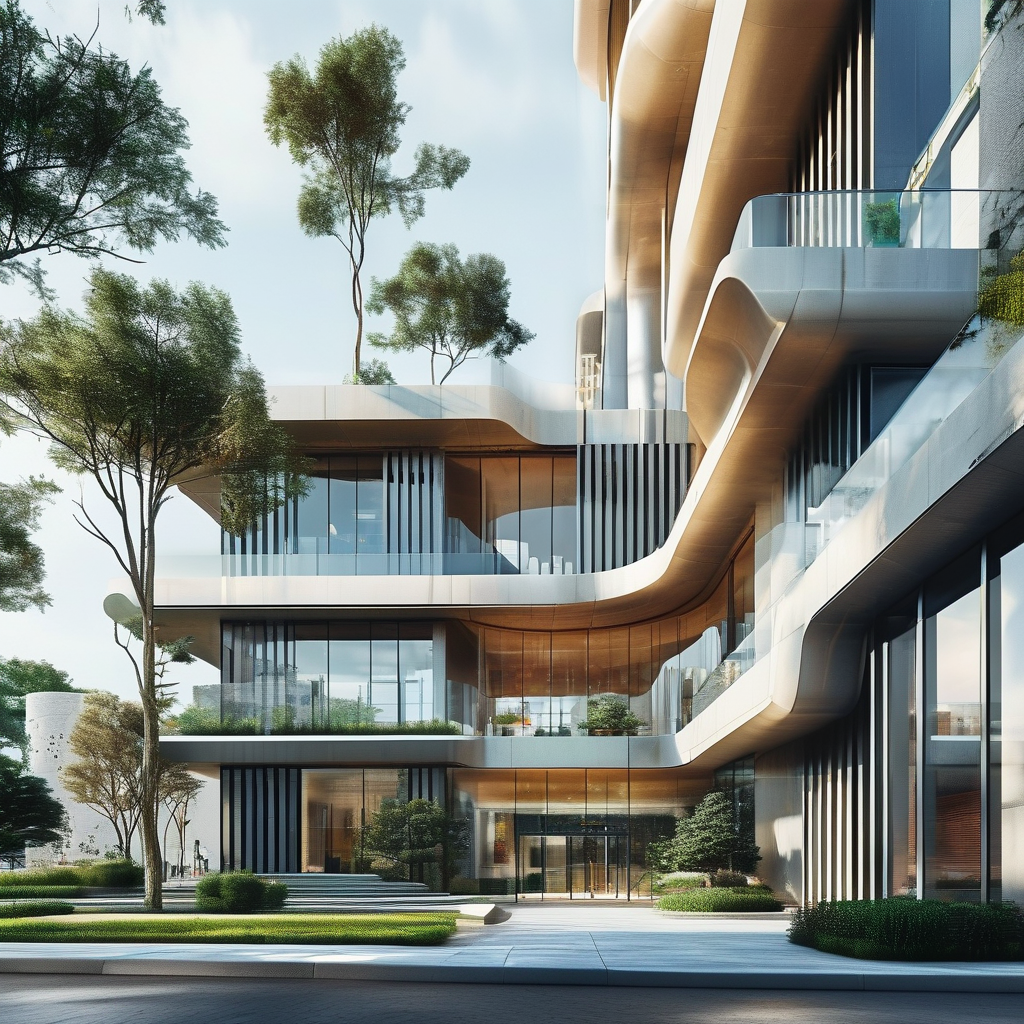
Sponge city projects, which aim to manage urban water in a sustainable manner, are increasingly relying on landscape architecture to achieve their goals. These projects focus on creating permeable surfaces, green roofs, and rain gardens to absorb and reuse rainwater, thereby reducing the risk of flooding and improving water quality. Landscape architects play a critical role in these initiatives by designing systems that blend seamlessly with the urban environment and enhance the city's overall aesthetic and functionality. For example, in the recent sponge city project in Wuhan, landscape architects designed a network of parks and green spaces that not only serve as water management systems but also provide recreational areas for residents. Such designs require a deep understanding of hydrology, ecology, and urban planning, making landscape architecture a vital discipline in the development of resilient urban environments. DEHE Architecture emphasizes the importance of landscape design in our projects, recognizing its potential to contribute to the environmental and social sustainability of cities.
行业资讯
The Role of Landscape Architecture in Sponge City Projects
DEHE·每日早讯
2026-08-29