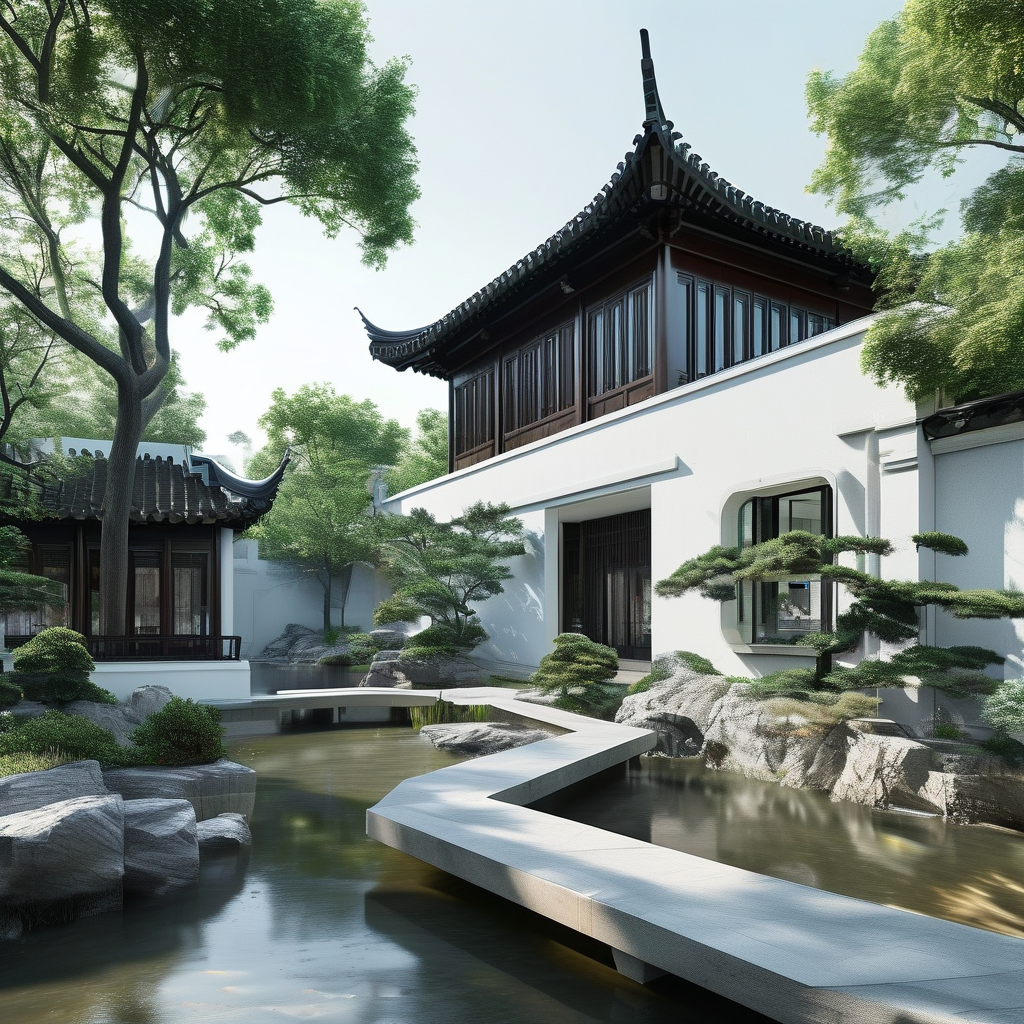
Heritage preservation and adaptive reuse are crucial components of urban renewal, especially in historic districts. These practices ensure that the cultural and historical significance of buildings and areas is maintained while allowing them to serve new functions and meet modern needs. DEHE Architecture has taken a leading role in this field, focusing on projects that not only preserve the architectural integrity of historic structures but also reintegrate them into contemporary urban settings. One such project is the adaptive reuse of the former textile mill in Guangzhou, China. The mill, dating back to the 1930s, has been transformed into a cultural and creative center, featuring exhibition spaces, artist studios, and community workshops. The design maintains the original industrial aesthetic while incorporating modern elements and sustainable practices, such as solar panels and green roofs. In another initiative, DEHE Architecture is working on the preservation of traditional courtyard houses in Beijing. Known as siheyuan, these houses are being revitalized to serve as boutique hotels and cultural heritage sites, providing a unique experience for visitors and preserving the city’s architectural legacy. The firm employs a meticulous approach, using 3D scanning and digital modeling to accurately document and restore the intricate details of these historical buildings. Through these projects, DEHE Architecture demonstrates a commitment to balancing historical preservation with modern functional requirements, contributing to the sustainable development of cities and the enrichment of their cultural fabric.
行业资讯
Heritage Preservation and Adaptive Reuse: Revitalizing Historic Districts
DEHE·每日早讯
2026-08-06